What Is a Serverless Vector Database?
TL;DR
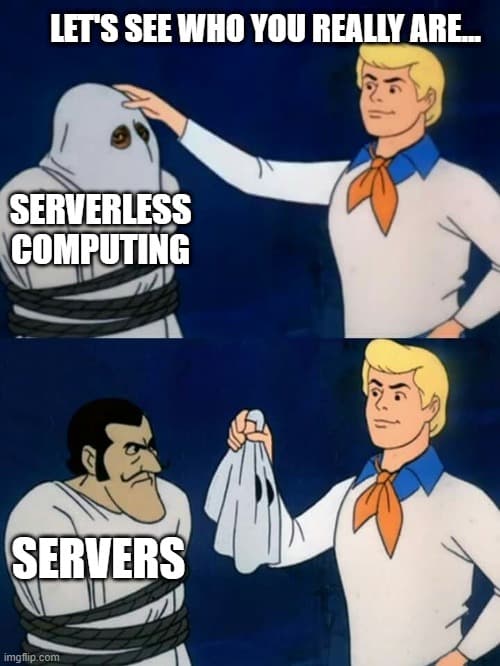
A serverless vector database runs on pay-as-you-go infrastructure scales from zero, and charges you nothing when idle. That's the definition in one sentence.
If your cluster is sitting there at 2 a.m. costing $50/month to hold 10,000 vectors, it's not serverless. The marketing page can say whatever it wants.
LambdaDB is the real thing. Starts at $0. Up to 90% cheaper than Pinecone for typical RAG workloads. Deploys to any region. Production from the first query, no tuning step.
Why I'm writing this
Same question keeps landing in our inbox, on Reddit, on Discord: "What does 'serverless' actually mean for a vector database? Isn't Pinecone already serverless?"
The word has been stretched thin. One of the most-upvoted comments on the Pinecone pricing thread put it bluntly: "True serverless architecture requires building on serverless primitives rather than just putting a serverless API on top of server clusters." Half the "serverless" vector DBs I've tested still bill a minimum monthly fee for an idle index. That's a server with a nicer dashboard.
This is for the person who just watched Pinecone's $50/mo minimum nuke their hobby project (real quote), or the RAG builder staring at a bill that climbed $50 → $380 → $2,847 in a quarter. No jargon. No "future of AI" framing. Just what the thing is, how to tell a real one from a fake one, and a 10-line example you can run today.
What a vector database actually does
Skip this if you've built a RAG pipeline before.
A vector database stores high-dimensional vectors (embeddings) and finds the nearest ones to a query vector. That's the core job. Metadata filtering, hybrid search, re-ranking: all built on top.
You need one when you're building RAG and want to retrieve relevant chunks from a corpus, when you're doing semantic search instead of keyword matching, when your AI agent needs long-term memory across sessions, or when you're running recommendations, or anomaly detection on embeddings.
The hard parts aren't storing vectors. They're three things: the index structure (HNSW, IVF, or something object-storage-native. This is what decides latency and recall); filtering, meaning how you combine metadata predicates like user_id = 42 AND lang = "ko" with vector search without destroying recall; and scale economics, meaning what happens when you go from 10k vectors to 10M to 1B.
"Serverless" is about that third one.
What "serverless" should mean: the 4-point test
Here's my test. A vector database is serverless if all four are true:
- $0 when idle. No minimum monthly fee. No "starter tier" that costs $50 just to exist.
- No capacity planning. No instance-size dropdown. No pre-provisioning pods or shards.
- Scales to zero automatically. Nothing running when nobody's querying. Traffic hits, it spins up.
- Storage and compute decoupled. You pay for what you store separately from what you query (per-request).
Pinecone's "serverless" tier, as of this writing, meets #2 and #3 but fails #1 for most real workloads. You hit a minimum spend the moment you have meaningful data. Read units scale linearly with namespace size: 1 RU per 1 GB, with a 0.25 RU minimum per query. For a 10 GB namespace, every query costs 10 RU before you even consider query volume — so real costs can quickly outpace the sticker price.
If "serverless" is marketing copy painted over a pod-based architecture, the invoice will tell you.
How a serverless vector database is built
No nodes. No clusters. No CREATE CLUSTER step. The index lives as immutable files. It reads the parts it needs, does approximate nearest neighbor search, returns results, and dies. You pay object storage (cents per GB/month), per-request compute (per millisecond), and egress if you pull data out. That's the whole bill.
Zero queries today? You pay storage only. A million queries? You pay for a million per-request invocations. Same architecture at 10k vectors or 1B. No migration, no re-sharding, no "you've outgrown your tier" email.
There's a tradeoff. Cold-start latency on the first query after idle. For most RAG apps, where a human is already waiting on an LLM response, nobody notices. For sub-100ms ad-tech, they do. Know which bucket you're in.
Serverless vs Pinecone vs Qdrant: the cost difference
Ran this on a real dataset last month. 500k vectors, 1536 dimensions (OpenAI text-embedding-3-small), ~200 queries/hour during business hours, idle overnight.
| Provider | Monthly cost |
|---|---|
| Pinecone (serverless tier, typical with metadata filtering) | ~$70+ |
| Qdrant (self-hosted on a small EC2, before ops time) | ~$45 infra + 10–20 eng hrs/mo for monitoring & upgrades |
| LambdaDB (serverless) | ~$7 |
About that Qdrant row: the $45 is only the instance. The real number grows the moment you count engineering hours. Pinecone-alternatives write-ups put Qdrant self-hosted closer to $120+/mo plus 20+ ops hours once you're actually running it. Self-hosting is cheaper than it looks only until you have to run it.
Your numbers will differ. The shape won't. Always-on infrastructure charges you for the 16 hours a day you're not using it. Real serverless doesn't.
Skeptical? Good. Run the workload yourself. Signup is free, first N queries are free, you'll see the bill (or the lack of one) inside a day.
A 10-line example
Here's what using a serverless vector database looks like. This is LambdaDB, but the shape is the same for any real one.
Install:
pip install lambdadb
Create a collection, insert, search:
from lambdadb import LambdaDB

with LambdaDB(
    project_api_key="your-api-key",
    base_url="your-base-url",
    project_name="your-project-name",
) as client:
    # Create once. No capacity planning.
    client.collections.create(
        collection_name="docs",
        index_configs={
            "text":   {"type": "text", "analyzers": ["english"]},
            "vector": {"type": "vector", "dimensions": 1536, "similarity": "cosine"},
            "lang":   {"type": "keyword"},
        },
    )
    coll = client.collection("docs")

    # Insert. Vectors + flat keyword fields.
    coll.docs.upsert(docs=[
        {"id": "doc-1", "text": "...", "vector": [0.1, 0.2, ...], "lang": "en"},
        {"id": "doc-2", "text": "...", "vector": [0.3, 0.4, ...], "lang": "ko"},
    ])

    # Hybrid query: vector + full-text + filter, in one call.
    results = coll.query(
        size=5,
        query={
            "rrf": [
                {"queryString": {"query": "your search text", "defaultField": "text"}},
                {"knn": {"field": "vector", "queryVector": query_embedding, "k": 5}},
            ],
        },
        filter={"queryString": {"query": "lang:en"}},
        consistent_read=True,
    )
No cluster. No index config. No warming step. Ten lines, you have vector search. Same code handles 1M vectors or 1B with no changes. Full API reference: docs.lambdadb.ai.
Common mistakes I see
Treating "serverless" as a pricing label: People assume any managed vector DB is serverless. It's not. Check the architecture. If there's an instance-size dropdown anywhere in signup, it's managed, not serverless. Different things.
Over-indexing on QPS benchmarks: Most RAG workloads run 1–50 QPS. The 10,000 QPS benchmarks on landing pages are for a workload you don't have. Optimize for cost at your scale, not for peak throughput you'll never hit.
Ignoring metadata filtering cost: A vector search with a restrictive filter like user_id = 42 is a different problem from an unfiltered one. Some "serverless" options degrade badly here. Pinecone caps metadata at 40KB per vector, which often forces a second round-trip to your primary DB just to get the payload back. Pure vector search without a keyword side will happily return "Error 222" when you searched for "Error 221" — cute in a demo, catastrophic in production. Test with your actual filters and hybrid patterns before you commit.
Building zero-copy branching from scratch: If you want dev/staging/prod isolation, you want branching. Copy-on-write branches (what we do with object storage) are a solved problem. Don't rebuild it by duplicating collections.
When serverless is the wrong choice
I'll say it since no one else will.
Sub-50ms P99 latency with always-on traffic? An always-on cluster will beat serverless on tail latency. Ad-tech, HFT, real-time personalization at scale. Use pods.
Need to run on-prem? Serverless is cloud-coupled by definition.
Running 24/7 at 90% utilization? The economics flip. Always-on is cheaper.
Dataset fits in 2GB of RAM and one service queries it? Be honest. You might just need pgvector on the Postgres you already run. Don't pay for complexity you don't need.
None of those apply to you? Serverless wins. For most RAG apps and side projects, none do.
FAQ
Is Pinecone serverless? Partially. Their serverless tier removes capacity planning, but there's a minimum spend once you have real data, so it fails the "$0 when idle" test for most workloads. Bills going $50 → $380 → $2,847 are the predictable endpoint.
What's the difference between serverless and managed? Managed means someone else runs the servers for you. Serverless means there are no servers sized for your workload in the first place — compute spins up per request. Managed still bills you for idle capacity. Serverless doesn't.
Can a serverless vector database handle production RAG? Yes. Cold-start latency is the one tradeoff, and for RAG — where the LLM call is already the bottleneck — it's invisible.
Which serverless vector database is cheapest? For the 500k-vector / 200-QPH benchmark above, LambdaDB came in at roughly 1/10 of Pinecone's serverless tier. Run your own workload to confirm.
What to ask your current vendor
On Pinecone, Weaviate Cloud, Qdrant Cloud, or similar, and wondering if you're overpaying? Ask them four things:
- What's my bill if I run zero queries for a month but keep my data?
- What's the minimum monthly commitment?
- Can I scale to zero in dev overnight?
- How much am I paying for idle replicas?
If the answers add up to a non-zero floor, you're not on a serverless vector database. You're on managed-with-autoscaling. Fine if you need it. Expensive if you don't.
Try it
Paste your real workload in, watch the bill. That's the whole pitch. A 70%+ drop or nothing, and either way you'll know inside a day.
- Docs: docs.lambdadb.ai
- Quickstart: docs.lambdadb.ai/guides/get-started/quickstart
- Collections guide: docs.lambdadb.ai/guides/collections/collection-overview
- Index types: docs.lambdadb.ai/guides/collections/index-types
- Signup ($0 to start): https://app.lambdadb.ai/auth/signup
Try LambdaDB on your own workload
$0 to start. $0 at idle. Pay per query. First collection in five minutes.